Natalie Hicks 3rd Year Occupational Therapy Student (BSc Hons) at the University of Central Lancashire and one of Able OTUK founding members – shares her thoughts in this blog post, please comment and share.
Throughout the years language has been used to control and divide people, as a way to scapegoat the ‘other’. The people would turn against those who were ‘beneath’ them (in their mind), rather than those ‘above’ them. White Wealthy European Men were at the top of the social order hierarchy, and anyone below this was discriminated against, and treated with abject brutality. We now live in the 21st Century, a time of iphones, WiFi, Zoom Calls and Netflix – we don’t surely discriminate and have this hierarchy now, do we?
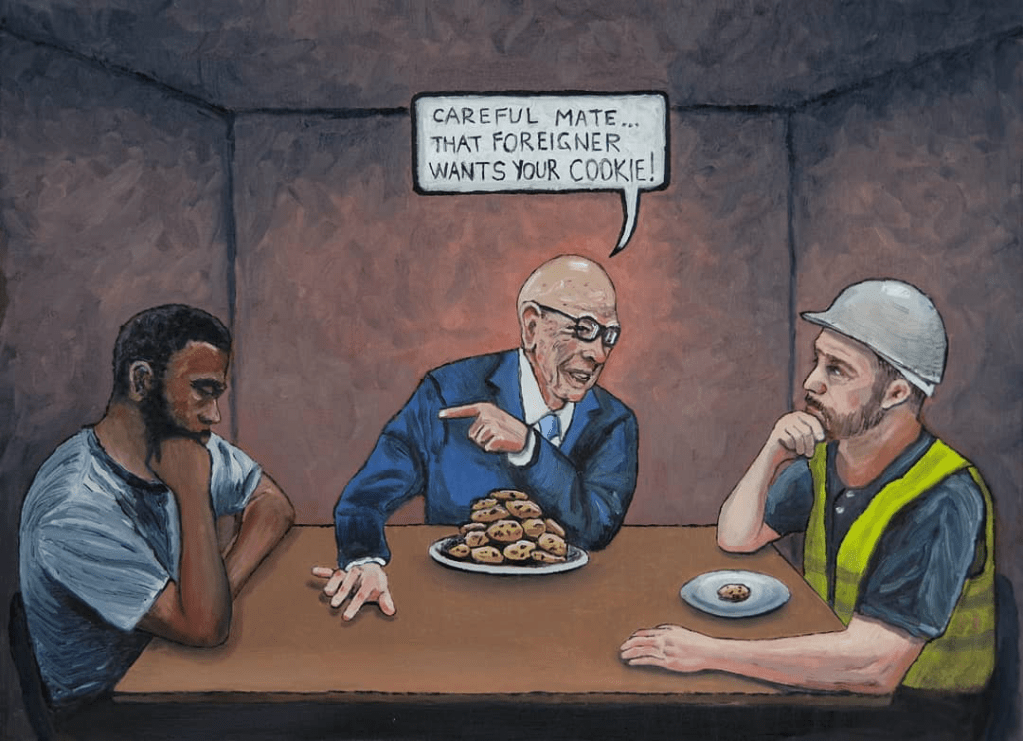
We only have to go back a generation to when it was deemed acceptable to put up a sign saying ‘No Irish, No Blacks No Dogs’ in a premises. When I grew up in Lancashire, in the late 80’s early 90’s, I was called an IRA bomber, told to eat potatoes, told to go back where I came from, told I wasn’t wanted here – all of this from my classmates at school. I was a white English girl, however I had an Irish father, and the surname of Murphy. My Irish grandparents moved to England, following my Irish great grandparents who emigrated here a number of years before. My grandparents brought with them my dad and aunt as children. Despite his children and wife being here, my grandfather couldn’t stand the way he was treated, being spat at in the street, told that he was not allowed in shops as he was Irish, unable to hold his head up high, he went back to Dublin. He died alone a few years later. Racism tore my dad’s family apart, and this pain was felt throughout my childhood. There are much far worse stories than mine – stories of those who do not have white skin, those stories are heart-breaking and sometimes terrifying, and yet, they stayed here in the UK, steadfast in their (correct) belief that they are welcome, as they were officially invited here.
Some people naively believe that now we are living in the 2020s, we have overcome discrimination, and we as a British society are no longer racist nor ableist. In 2022, the UK government policy paper ‘Inclusive Britain: Government response to the Commission on Race and Ethnic Disparities’ (Gov.UK, 2022) found that there was no longer institutionalised racism in the UK. This has emboldened people in their belief that there is no longer any Discrimination. We may no longer despise the Irish, however today’s immigrants, the new ‘other’, are legal asylum seekers, Polish, Romanian, Syrian, and basically anyone speaking another language, or anyone who is not ‘white enough’. They get asked where they came from. This is now supposed to be an acceptable question in British culture. Is it really acceptable?
There is still so much ableism in the UK, it’s so rarely spoken of, that most people don’t even know what the word ‘ableism’ means. Disabled people know.
Source: (whatisableism.tumblr.com)
In June 2022, the artist Lizzo was criticised for using the ableist slur, ‘sp*z’ in her single ‘Grrrls’. Lizzo reacted by apologising on twitter, and releasing a new version within days of the original being released (Cain, 2022). Less than two months later, the artist Beyonce Knowles also included the same slur, in the song ‘Heated’ on her new album ‘Renaissance’ and bowed to pressure from the online disabled activist community to release a new version, with no apology (Jacobs, 2022). Should the disabled activist community need to call out these artists? Should disabled people be policing the world to prevent people using words which may be exceptionally offensive? I am shocked that this word or anything related to it is still in such common use in 2022. I am also very surprised that during the production of these two songs, not one person considered or cared just how harmful this word would be. Maybe they did, and just did not care?
Recently I used the term “falling on deaf ears” in a text, and realised what an awful ableist term this is. It has made me start to consider language as a whole and the impact that it can have, and that is how this post was born. I often hear things others say which are ableist, some make me immediately cringe inside and others take a little longer. It is important for us all to consider why we say ableist things both as an individual, and as a society, and then we must make an effort to accept they aren’t suitable anymore, and to stop the usage.
Table 1. Ableist Words and Phrases in use in Language in 2022
| Turning a blind eye Blinded by (rage / ignorance / stupidity etc) Blind to (something) Deaf to (something) Crippled by/with (fear/pain etc) Wheelchair ‘bound’ (no one is bound to a wheelchair – wheelchair USER is the correct term) Retarded Mental Dumb Psycho OCD – (are you actually diagnosed with OCD?) ‘Suffers / suffering’ from (insert illness/disability here) i.e. “she suffers from autism” |
These linguistic micro-aggressions are hurtful to disabled people, for example, saying “falling on deaf ears”, this is a phrase which associates deaf people to being ignorant (Novic, 2021). That was not at all what I wanted to say in that message. Ableist language still exists because we mimic others as a child, and we don’t stop to think for ourselves (Novic, 2021). Stop and start to think for yourself, and change language for the better.
No one is perfect with their language, we are all part of the problem, and we must all address our inbuilt ableism, racism and homophobia / transphobia, and then start to dismantle this, and it starts with the language we use. We are all on our journey to be better people. If you are in doubt about where to start on your journey speak to people – advocates, disruptors and activists. But remember that time is precious – so be polite and appreciative.
References
Cain, S. (2022, June 14). Lizzo removes ‘harmful’ ableist slur from new song Grrrls after criticism. Retrieved September 10, 2022, from The Guardian: https://www.theguardian.com/music/2022/jun/14/lizzo-removes-harmful-ableist-slur-from-new-song-grrrls-after-criticism
Gov.UK. (2022, March 17). Inclusive Britain: Government response to the Commission on Race and Ethnic Disparities. Retrieved September 10, 2022, from Gov.UK: https://www.gov.uk/government/publications/inclusive-britain-action-plan-government-response-to-the-commission-on-race-and-ethnic-disparities
Jacobs, J. (2022, August 1). Beyoncé Will Change Lyrics After Criticism Over ‘Ableist Language’. Retrieved September 10, 2022, from The New York Times: https://www.nytimes.com/2022/08/01/arts/music/beyonce-lyrics-heated-changed.html
Lushch, D. (2020). The Bullshit Weaver. Retrieved September 19, 2022, from https://www.instagram.com/p/CGtZG6aFPtQ/?utm_source=ig_web_copy_link
Novic, S. (2021, April 5). The harmful ableist language you unknowingly use. Retrieved September 21, 2022, from BBC: https://www.bbc.com/worklife/article/20210330-the-harmful-ableist-language-you-unknowingly-use
whatisableism.tumblr.com. (n.d.). What is Ableism? Retrieved September 10, 2022, from https://whatisableism.tumblr.com/about
 AffinOT
Reblogged this on The Disabled Occupational Therapist (Well Almost…) and commented:
I
LikeLike